Raids alone will not end illicit alcohol harm. Kenya also needs treatment, safer supply and community support.
On 21 October 2026, Deputy President Kithure Kindiki declared illicit alcohol one of Kenya's top three national threats. Speaking after a meeting with the Inspector-General of Police, the Director of Public Prosecutions, county governments and heads of agencies, he announced a whole-of-government campaign against illicit alcohol, counterfeit goods and narcotics.
The scale of the operation is already visible. According to government figures, there were nine raids on premises selling illegal ethanol and 116 raids on sellers of illicit brews nationwide in just ten days.
What Has Been Announced
- A coordinated campaign involving NACADA, the Anti-Counterfeit Authority, KEBS and the police Anti-Narcotics Unit
- A permanent secretariat at Harambee House Annex to coordinate enforcement
- Finalised legislative proposals to raise penalties for making, distributing and selling illicit alcohol
- A law on asset forfeiture against cartel networks, with proceeds directed to rehabilitating people with alcohol and drug addiction
- A community involvement framework to be rolled out alongside enforcement
The government has stressed that the crackdown targets criminal networks, not legitimate businesses.
Why This Matters for Public Health
Illicit and adulterated alcohol is one of the most dangerous forms of drinking in Kenya. Unregulated brews and diluted industrial ethanol can contain methanol and other contaminants that cause blindness, organ failure and death. Kenya has experienced repeated mass poisoning incidents linked to these products, and the people most affected are often poor, rural and already marginalised.
Taking toxic products off the market is a genuine harm reduction measure. HRSK welcomes action against the criminal supply chain, especially the commitment to direct seized assets toward rehabilitation.
Enforcement Alone Is Not Enough
Experience in Kenya and elsewhere shows that crackdowns without support can shift harm rather than reduce it. When cheap illicit alcohol disappears but dependence remains, people may turn to even more dangerous sources, drink in hidden places, or avoid health services for fear of arrest.
"People who are dependent on alcohol need a path to care, not only a closed bar. Every raid should be matched by a referral pathway."
A harm reduction approach would add:
- Treatment capacity: more outpatient alcohol treatment and withdrawal management at county level, so people can get help where they live
- Early warning: rapid alerts to communities and health facilities when toxic batches are detected
- Clinical readiness: training and supplies for health workers to recognise and treat methanol poisoning quickly
- Affordable, regulated options: policy that does not make legal, quality-controlled alcohol so expensive that illicit products become the only choice for low-income drinkers
- No criminalisation of drinkers: enforcement aimed at producers and distributors, not at people with alcohol dependence
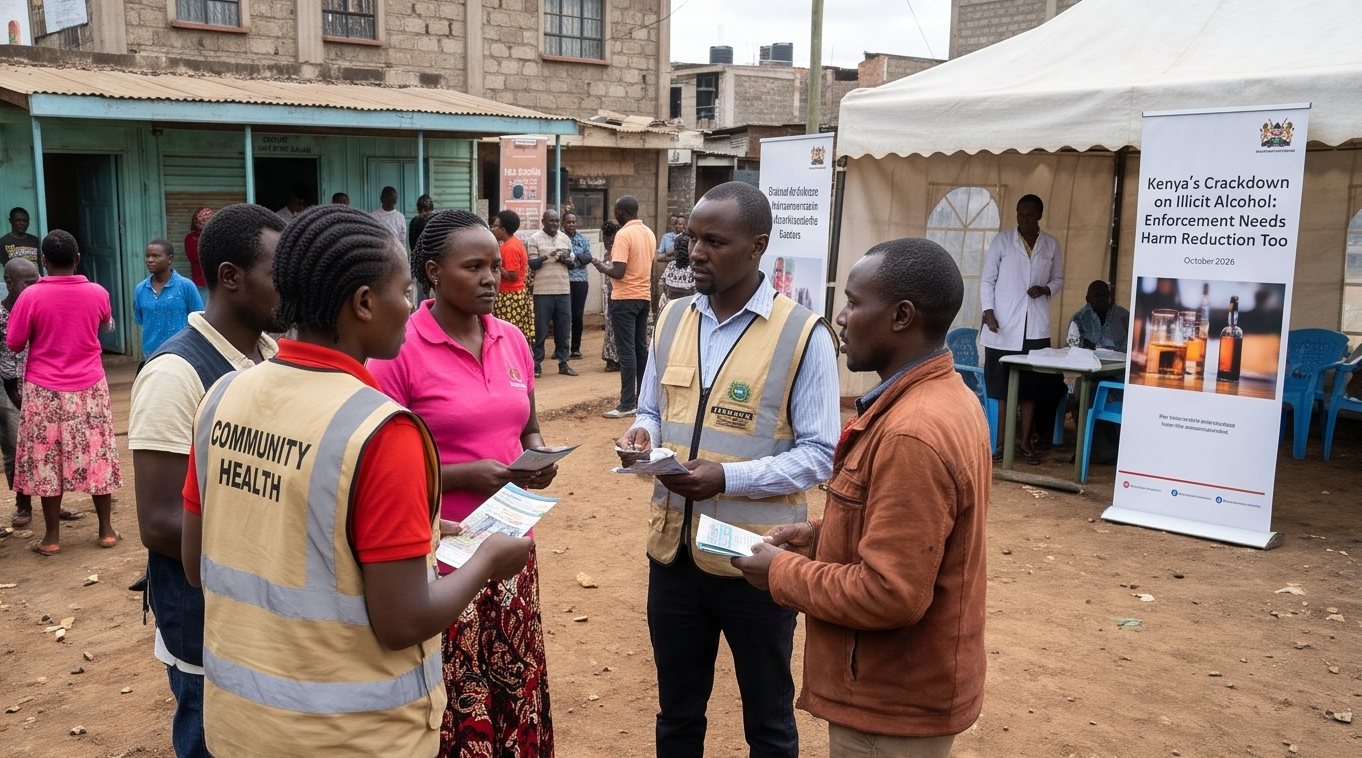
- Community voice: a community framework that includes families, recovery groups and community health promoters, not only informants
Conclusion
The government's new focus on illicit alcohol is an opportunity. If enforcement is combined with treatment, safer supply and community support, Kenya can reduce poisonings and deaths while helping people with alcohol dependence recover. HRSK stands ready to work with NACADA, county governments and health workers to make that happen.
Sources
- allAfrica — Government moves to tighten noose on illicit alcohol cartels (22 Oct 2026)
- NACADA clarification on the national alcohol and drug policy framework
- allAfrica — NACADA backs President's resolve on alcohol and drug abuse (Jan 2026)
