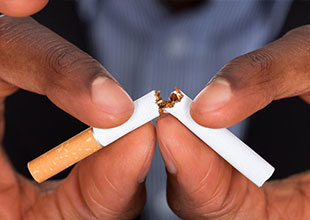
Are nicotine pouches and heated tobacco products safer than cigarettes? HRSK examines the science for Kenya's tobacco harm reduction landscape.
As the global public health community intensifies its efforts to reduce tobacco-related disease and death, a new generation of nicotine and tobacco products has emerged that are fundamentally different from the traditional cigarette. Nicotine pouches and heated tobacco products (HTPs) sit at the centre of a heated global debate — and their relevance to Kenya is growing rapidly.
For HRSK, the question is not whether these products are perfectly safe — no nicotine product is entirely without risk — but whether they represent a meaningfully lower-risk option for the millions of Kenyan adults who currently smoke and cannot or will not quit. The evidence increasingly suggests: yes, they do.
Understanding Heated Tobacco Products (HTPs)
Heated tobacco products heat processed tobacco to temperatures of between 250–350°C — significantly below the 600–900°C combustion temperature of a lit cigarette. This avoids combustion, which is the primary source of the thousands of toxic chemicals found in cigarette smoke, including carbon monoxide, formaldehyde, benzene, and dozens of known carcinogens.
The resulting aerosol still contains nicotine — which is what satisfies the smoker's craving — but contains dramatically lower levels of the harmful combustion by-products. Major regulatory bodies and independent researchers have studied HTPs extensively. Key findings include:
- HTPs generate on average 80–95% fewer harmful chemicals than conventional cigarettes, as measured across WHO-designated biomarkers of harm.
- Studies of biomarkers of exposure in HTP users show significant reductions in levels of harmful chemicals in the body compared to smokers.
- Japan's population-level data has shown a notable decline in cigarette sales since HTP introduction, suggesting real-world switching behaviour rather than dual use only.
- The UK's Committee on Toxicity has concluded that HTPs are likely to be less harmful than cigarettes, while noting they are not without risk.
What Are Nicotine Pouches?
Nicotine pouches are small, white pouches placed under the lip. They contain nicotine extracted from tobacco plants but contain no tobacco leaf itself. The nicotine is absorbed through the gum tissue.
Because nicotine pouches contain no tobacco and produce no smoke or aerosol from burning, they eliminate exposure to combustion-related toxicants entirely. They represent perhaps the most significant advance in tobacco harm reduction since the introduction of nicotine replacement therapy (NRT) in the 1980s.
Key characteristics of nicotine pouches include:
- No tobacco leaf — only pharmaceutical-grade or food-grade ingredients plus extracted nicotine
- No combustion, no smoke, no aerosol — virtually no bystander exposure
- Discreet use — can be used in smoke-free environments
- Available in varying nicotine strengths to support gradual dose reduction
- Evidence-backed reduction in biomarkers of tobacco-related harm vs. smoking
The African Context
In Kenya and across Africa, combustible tobacco use — primarily cigarettes and local products like shisha and hand-rolled tobacco — remains a significant public health concern. The WHO FCTC Article 14 specifically calls on governments to provide cessation support, and harm reduction tools are increasingly recognised as essential components of this.
Kenya's regulatory environment for novel nicotine products is still developing. The Kenya Tobacco Control Act and its amendments have primarily addressed cigarettes. However, the arrival of HTPs and nicotine pouches in the Kenyan market means that clear, evidence-based regulatory guidance is urgently needed.
HRSK's position is that these products should be regulated proportionately to their risk — more strictly than NRT, but less strictly than cigarettes. The current regulatory vacuum risks either leaving consumers without access to potentially life-saving alternatives, or allowing unregulated products of unknown quality to proliferate.
What the Science Says About Switching
The harm reduction calculus is straightforward: a smoker who completely switches from cigarettes to either HTPs or nicotine pouches dramatically reduces their exposure to the chemicals responsible for tobacco-related disease. The key word is "completely" — dual use (using both cigarettes and the alternative product) provides much less benefit than complete switching.
Research from the UK, Japan, and the United States consistently shows:
- Complete switching from cigarettes to HTPs is associated with significant reductions in exposure to carcinogens and respiratory toxicants
- Nicotine pouch users who completely quit smoking show similar biomarker improvements to those achieved with NRT
- The abuse liability (addiction potential) of HTPs and nicotine pouches in non-smoking youth appears lower than that of cigarettes, though regulation to prevent youth access remains critical
"Harm reduction approaches are not the enemy of cessation — they are often the pathway to it. For many smokers, switching to a lower-harm product is the first step on a longer journey away from tobacco altogether." — Dr. Michael Kariuki, HRSK
HRSK's Approach
At HRSK, we advocate for a pragmatic, evidence-based approach to tobacco harm reduction that includes:
- Strong cessation support for all smokers who wish to quit entirely
- Access to licensed NRT for those attempting cessation
- Proportionate regulation of HTPs and nicotine pouches as reduced-risk products
- Clear consumer information on the relative risks of different tobacco and nicotine products
- Prevention of youth initiation — no nicotine product is appropriate for non-smokers or young people
The goal is always better health outcomes. For a committed long-term smoker who has tried and failed to quit with conventional methods, a complete switch to a significantly lower-risk product can save their life. That is not a compromise — it is harm reduction at its most practical and most powerful.
