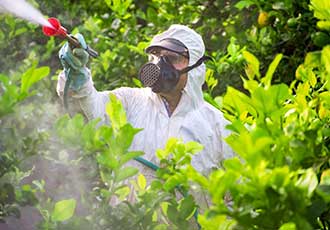
Safe pesticide handling saves lives. HRSK's practical guide for Kenyan farmers and households — protect yourself, your family, and your community.
Pesticides save lives — they protect crops that feed millions of Kenyan families and control vector-borne diseases like malaria. But they also kill. Acute pesticide poisoning is responsible for thousands of hospitalisations and hundreds of deaths across Kenya every year, and the true scale of sub-acute and chronic exposure is likely far greater than current data suggests.
HRSK's pesticide harm reduction programme is built on a simple premise: since pesticides will continue to be used in Kenyan agriculture and homes, our job is to help people use them as safely as possible while advocating for system-level changes that make safety the default, not the exception.
Understanding Pesticide Toxicity
Not all pesticides are equally dangerous. The World Health Organisation classifies pesticides by hazard:
- Class Ia (Extremely Hazardous): Including aldicarb, methyl parathion. Highly toxic even in tiny doses — these should be restricted from general agricultural use.
- Class Ib (Highly Hazardous): Including methomyl, carbofuran. Require strict controls and full PPE.
- Class II (Moderately Hazardous): Many commonly used organophosphates and carbamates fall here. Still capable of causing serious harm with significant exposure.
- Class III (Slightly Hazardous): Including many herbicides and fungicides. Lower acute risk but chronic exposure concerns remain.
In Kenya, highly hazardous pesticides including organophosphates and carbamates are widely available through agrovets, often without adequate safety information and sometimes without requiring proof of training or the need for a licence. This accessibility, combined with low awareness of risks, is a primary driver of pesticide poisoning in Kenyan communities.
Routes of Exposure
Pesticides enter the body through three main routes, and understanding these is key to prevention:
- Dermal (skin) absorption: The most common route of occupational exposure. Many pesticides — especially organophosphates — penetrate skin readily, particularly when the skin is wet from sweat.
- Inhalation: Breathing in spray mist, dust, or fumes. Particularly significant when applying pesticides in enclosed spaces or without respiratory protection.
- Ingestion: Swallowing pesticide, most often through contaminated food or water, hand-to-mouth contact during or after application, or deliberate self-poisoning.
Safe Handling: The Five Principles
HRSK's community training programme centres on five core pesticide safety principles:
1. Read the Label — Every Time
The pesticide label is a legal document and a lifesaving resource. Before using any pesticide, read the label fully. Look for the hazard classification, required PPE, mixing instructions, safe application methods, pre-harvest interval (for crops), and first aid information.
2. Use Personal Protective Equipment (PPE)
Appropriate PPE is not optional — it is essential. For most moderately and highly hazardous pesticides, this includes gloves (nitrile or chemical-resistant rubber — not cotton or thin plastic), long-sleeved clothing, boots, and where spraying or mixing is involved, eye protection and respiratory protection. PPE must be maintained, washed after use, and replaced when damaged.
3. Mix and Apply Safely
Mix pesticides outdoors or in well-ventilated areas. Never mix by hand — use measuring equipment. Apply pesticides when wind is low to minimise drift. Never spray towards people, animals, or water sources. Never eat, drink, or smoke while handling pesticides.
4. Store and Dispose Properly
Store pesticides in their original containers, locked away from children and food, in a cool, dry, well-ventilated location. Never store pesticides in food or drink containers. Dispose of empty containers safely — triple-rinse, puncture, and bury at least 50cm deep, far from water sources. Never burn pesticide containers.
5. Wash Thoroughly After Use
Wash all exposed skin thoroughly with soap and water immediately after handling pesticides. Change and wash contaminated clothing before wearing again. Wash PPE before removing it if possible, to avoid contaminating hands.
Recognising and Responding to Pesticide Poisoning
Organophosphate and carbamate poisoning — the most common types in Kenya — produce a recognisable constellation of symptoms known by the mnemonic SLUDGE:
- Salivation (excessive drooling)
- Lacrimation (tearing)
- Urination
- Defecation / Diarrhoea
- Gastrointestinal cramps
- Emesis (vomiting)
Additional signs include pin-point pupils, excessive sweating, muscle twitching, difficulty breathing, confusion, and in severe cases, seizures, loss of consciousness, and death.
Emergency response: Remove the person from the exposure source. Remove contaminated clothing (use gloves if possible). Wash skin with soap and water. Seek emergency medical care immediately. Bring the pesticide container or label to hospital. Do NOT induce vomiting unless instructed by a healthcare professional.
In Kenya, the Poison Information Centre can be reached at the Nairobi Poison Information Centre, Kenyatta National Hospital.
"Pesticide safety is not about telling farmers to stop using pesticides. It is about helping them use the tools they depend on in ways that protect their health, their families, and their communities." — Dr. Michael Kariuki, HRSK
HRSK's Pesticide Programme
HRSK's pesticide harm reduction programme works at community level through training workshops for farmers and agrovets, development of local-language educational materials, advocacy for improved pesticide regulation, and capacity building for healthcare workers on pesticide poisoning management. We partner with agricultural extension officers, healthcare facilities, and community health workers to ensure that safety information reaches those who need it most.
