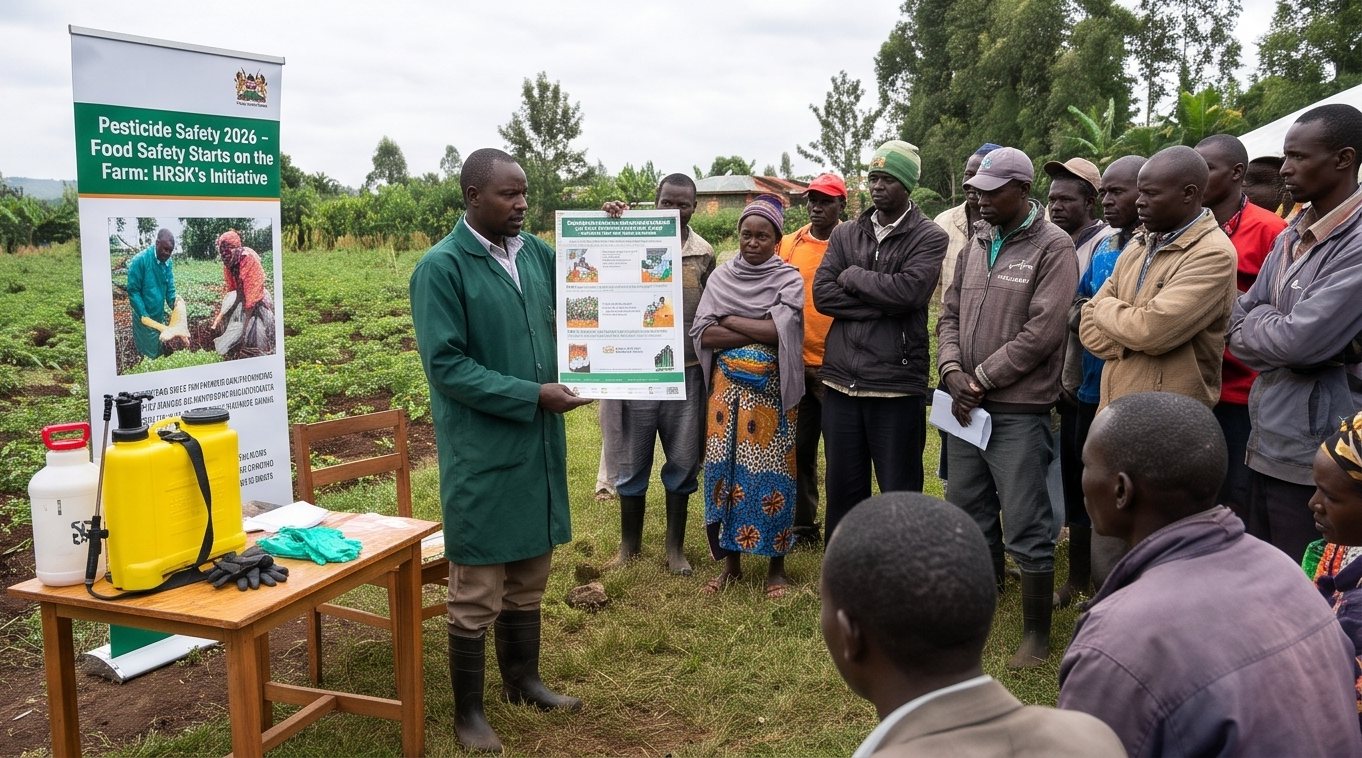
Kenya must grow more food, and safer food. HRSK's call to action on hazardous pesticides.
Kenya is working hard to increase food production. HRSK believes that effort must go hand in hand with food safety. In August 2026, HRSK executive member Dr Nashon Okanga called on the government to act on the use of hazardous pesticides, saying the country "should give greater attention to food safety alongside efforts to increase food production."
The call drew national media attention and reflects a concern HRSK hears repeatedly from farmers, health workers and consumers.
Why Hazardous Pesticides Are a Health Issue
The FAO and WHO define highly hazardous pesticides as those that pose particularly high acute or chronic risks to human health or the environment. WHO links exposure to some pesticides with cancer, reproductive and developmental problems, nervous system damage and hormone disruption.
In Kenya the risk falls on three groups: farmers and farm workers who mix and spray without adequate protection, families who live near sprayed fields or store chemicals at home, and consumers who eat produce carrying residues above safe limits. Previous HRSK reporting on banned pesticides found in potatoes shows this is not a theoretical concern.
What HRSK Is Asking For
- Make safer options affordable: lower the cost of safer pest control products so that farmers are not forced to choose the cheapest, most toxic option
- Stronger regulation and enforcement: tighter oversight of what is registered, imported and sold, and action against unregistered and counterfeit products
- Clear labelling and guidance: labels that farmers can read and understand, with practical instructions on safe handling, application and disposal
- Scrutiny of products restricted elsewhere: careful review of pesticides that are banned or restricted in other markets but may still enter Kenya
- Integrated pest management: wider adoption of methods that reduce reliance on chemicals
- Research into biopesticides: investment in biological and lower-risk pest control suited to Kenyan conditions
- Protective equipment training: more training for farmers on the correct use of protective gear
"Harm reduction on the farm means making the safer choice the easier and cheaper choice."
The Role of the Pest Control Products Board
Kenya's Pest Control Products Board (PCPB) oversees the import, manufacture, distribution, sale and use of pest control products and keeps a register of approved products. Stronger resourcing for the PCPB, better residue testing, and clear public information about which products are approved would help farmers and buyers make safer decisions.
What Farmers Can Do Now
- Buy only products registered by the PCPB and avoid unlabelled or repackaged chemicals
- Wear gloves, masks, eye protection and long clothing when mixing and spraying
- Respect pre-harvest intervals so residues can break down before produce is sold or eaten
- Store pesticides locked away from children, food and water sources
- Ask agricultural extension officers about integrated pest management options
Conclusion
Kenya does not have to choose between feeding its people and protecting them. With affordable safer products, stronger regulation and practical training, farmers can protect their crops, their health and the health of the consumers who buy their produce. HRSK will keep pushing for these changes and working with farming communities to put them into practice.
Sources
- The Star — Harm reduction group calls for action on hazardous pesticide use in Kenya (12 Aug 2026)
- Pest Control Products Board (PCPB)
